Table of Contents
What is the best yoga to start with as a beginner?
The First Step on the Mat: Finding Your Start
Starting yoga can feel a bit like walking into a conversation that has been going on for three thousand years. Between the complex Sanskrit names, the gravity-defying poses on social media, and the myriad of styles like Vinyasa, Ashtanga, and Yin, it is perfectly natural to feel overwhelmed. You might be asking yourself, “Which one is for me?” or “Am I even flexible enough to begin?”
The good news is that yoga was designed to meet you exactly where you are today. For most people, the best yoga to start with as a beginner is Hatha Yoga. It serves as the foundational blueprint for almost all other physical yoga styles. By focusing on slower movements, basic postures, and conscious breathing, Hatha allows you to build a safe and sustainable practice without the pressure of keeping up with a fast-paced “flow.”
In a bustling city like Chennai, where our daily lives are often a marathon of traffic and deadlines, choosing a beginner-friendly style isn’t just about exercise—it is about reclaiming your peace. Whether you are practicing under the sunrise at Besant Nagar beach or in a quiet corner of your home, starting with the right style ensures you build a relationship with yoga that lasts a lifetime.
What is Beginner-Friendly Yoga?
Beginner-friendly yoga is a foundational practice, typically rooted in Hatha Yoga, that emphasizes the fundamental alignment of physical postures (asanas), basic breathing techniques (pranayama), and introductory mindfulness. It prioritizes safety, accessibility, and steady progression over physical intensity or complex transitions, making it suitable for all body types.
Why the Right Style Matters
Choosing the correct starting point is the difference between falling in love with a practice and giving up after two sessions. For a beginner, the primary goal is neuromuscular education. This means teaching your brain how to communicate with your muscles in ways it hasn’t before.
If you jump straight into a high-intensity Power Yoga or a complex Vinyasa class, you risk “compensatory movement.” This happens when your body tries to mimic a pose by straining the wrong muscles, often leading to lower back pain or joint stress. Starting with a foundational style like Hatha or Restorative yoga allows your connective tissues to adapt gradually to new ranges of motion.
Beyond the physical, the right start impacts your mental wellness. Yoga is meant to lower your cortisol (stress hormone) levels. If you are struggling to keep up with a fast class, your stress might actually increase. A gentle start ensures that your yoga mat remains a “stress-free zone.”
How it Works: The Anatomy of a Beginner Class
When you step into a foundational yoga session, the structure is designed to guide you from a state of external chaos to internal calm. Here is what you can typically expect:
- Centering: Most classes begin with a few minutes of sitting quietly. This helps you leave the noise of Chennai’s streets behind and focus on your natural breath.
- Warm-up: Gentle movements like “Cat-Cow” stretches or neck rotations prepare the joints and increase the synovial fluid (natural lubrication) in your spine.
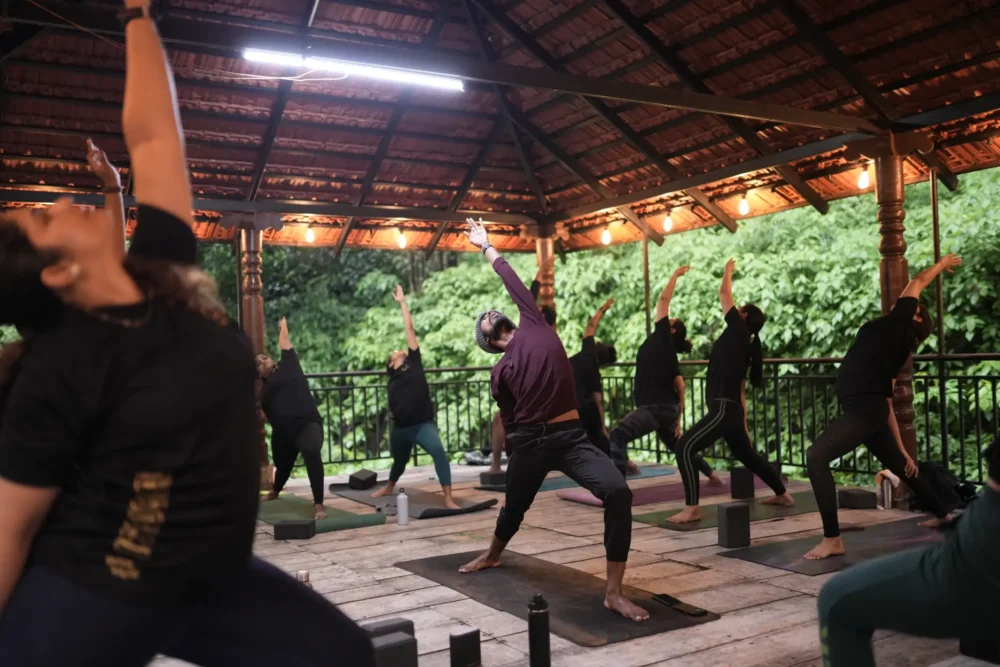
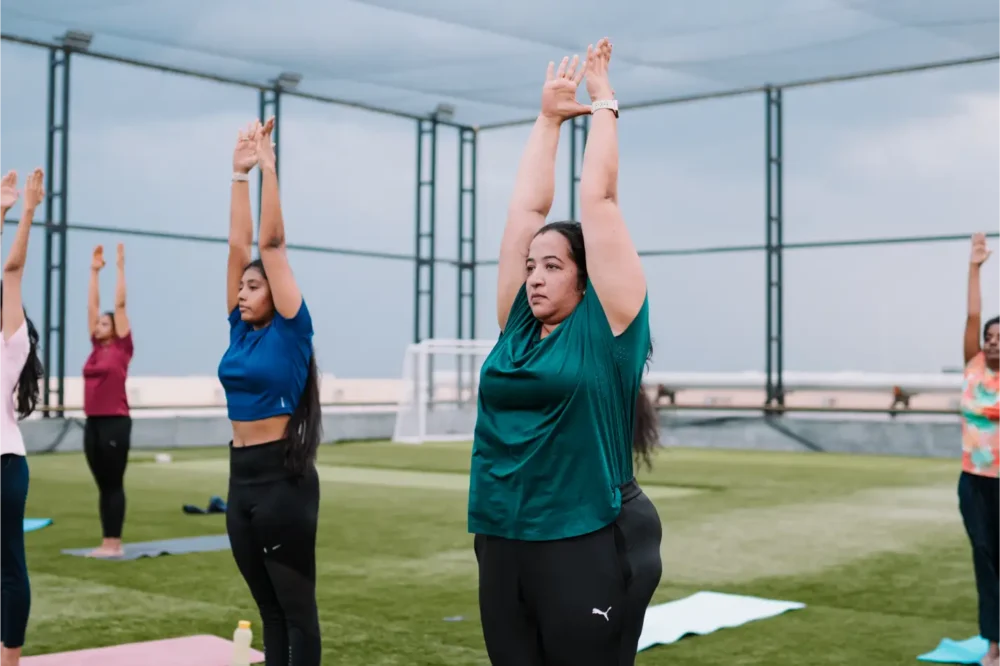
- The Foundation Poses: You will learn standing poses like Mountain Pose (Tadasana) or Warrior I (Virabhadrasana I). These build leg strength and improve balance.
- Breath Synchronization: You will learn to move with your breath—inhaling to expand and exhaling to fold or twist.
- Final Relaxation (Savasana): Every class ends with lying flat on your back. This is where your nervous system “saves” the work you’ve done, allowing your body to enter a deep state of repair.
The Holistic Benefits of Starting Today
Physical Benefits
- Improved Spinal Hygiene: Yoga helps reverse the “slouch” caused by long hours at a desk or driving.
- Functional Strength: You build “lean” muscle that helps with everyday tasks like lifting groceries or climbing stairs.
- Joint Longevity: Gentle movement keeps your joints lubricated and mobile.
Mental and Emotional Benefits
- Vagus Nerve Stimulation: Deep breathing triggers the relaxation response, instantly calming anxiety.
- Improved Focus: Learning to hold a pose requires mental presence, which translates to better concentration at work.
- Emotional Resilience: Staying calm in a challenging pose teaches you how to stay calm during a challenging day.
How Beginners Can Approach Their First Month
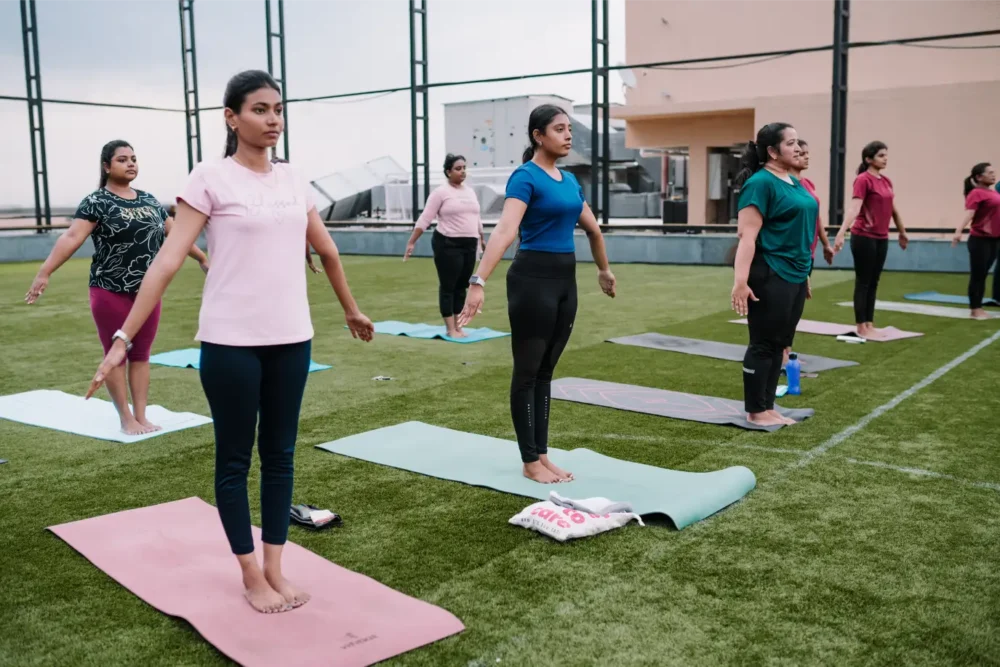
If you are ready to begin, don’t worry about being “perfect.” Follow this simple roadmap to navigate your first thirty days:
Week 1: Focus on Attendance. Just get to the mat. Whether it’s a 20-minute home session or a local class in Adyar, the goal is simply to show up.
Week 2: Focus on Breath. Start noticing if you hold your breath when things get difficult. Try to keep your inhales and exhales steady and even.
Week 3: Focus on Sensation. Learn the difference between “good pain” (muscles stretching) and “bad pain” (sharp, pinching joint sensations). Always back off if it feels sharp.
Week 4: Focus on Consistency. By now, you might feel less “clunky.” Notice the small wins, like touching your toes a little easier or sleeping better at night.
Common Misunderstandings About Yoga
- “I’m not flexible enough”: This is like saying you are too dirty to take a bath. You do yoga to become flexible, not because you already are.
- “It’s too slow for me”: While Hatha is slower, holding a pose for 60 seconds builds a different, more intense kind of strength than lifting weights quickly.
- “It’s a religion”: Yoga is a science of wellness. While it has spiritual roots, it is practiced globally as a secular tool for physical and mental health.
Real-World Scenarios
Scenario 1: The OMR Corporate Professional
Anjali, a project manager in Sholinganallur, suffered from chronic migraines and tight shoulders. She thought she needed a “hard” workout to destress. However, she started with a gentle Hatha class. By learning to release her jaw and neck tension through simple stretches, her migraine frequency dropped by 50% within a month.
Scenario 2: The Retiree in Mylapore
Mr. Rao, aged 65, felt his balance was slipping. He was afraid of falling. He started with “Chair Yoga,” a variation of Hatha. By using a chair for support, he built enough leg strength and ankle stability to eventually move to a standard mat class. Today, he walks the beach every morning with renewed confidence.
Practical Tips for Your First Class
- Eat Light: Avoid a heavy meal 2 hours before class. A small fruit is fine, but a full lunch will make twisting uncomfortable.
- Arrive Early: If attending a class in Chennai, arrive 10 minutes early. This gives you time to talk to the teacher about any injuries.
- Invest in a Non-Slip Mat: A cheap, slippery mat is a distraction. A good “grip” mat allows you to relax into the poses.
- Wear Breathable Clothing: Cotton is great for Chennai’s humidity, but ensure it has enough “stretch” for you to move freely.
FAQs (Beginner Specific)
1. How many times a week should a beginner do yoga? Start with 2–3 times a week. This allows your muscles to recover while still building the “muscle memory” needed to progress.
2. Can I learn yoga from YouTube as a beginner? You can, but it is better to attend a live class (online or offline) for the first few weeks. A live teacher can see your alignment and prevent you from forming bad habits.
3. What is the difference between Hatha and Vinyasa? Hatha is like a series of “still photos”—you hold poses one by one. Vinyasa is like a “movie”—you flow continuously from one pose to the next. Hatha is generally better for beginners.
4. Is yoga better in the morning or evening? In Chennai, morning (5:30 AM – 7:30 AM) is ideal to beat the heat and start the day with a clear mind. However, evening yoga is great for shedding work stress.
5. Will yoga help me lose weight? Yes, but indirectly at first. It balances your hormones and reduces stress-eating. As you move to more dynamic styles, the calorie burn increases.
6. Do I need to be a vegetarian to do yoga? No. While yoga encourages mindful eating, there are no dietary requirements to start practicing.
7. Is it okay to do yoga during my period? Yes, but many women prefer a “Restorative” or gentle practice during this time. Avoid deep twists or intense core work if you feel fatigued.
8. What if I can’t do a pose? Every pose has a “modification.” If you can’t reach the floor, we use blocks. If you can’t balance, we use a wall. There is always a version for you.
A Journey of a Thousand Breaths
Yoga is a gift you give to your future self. It is a commitment to aging with grace, moving with ease, and breathing with intention. Don’t worry about being the “best” in the room; simply focus on being the most present version of yourself.
In a city that is always moving, your yoga mat is the one place where you are allowed to be still. Welcome to the practice.
Would you like me to help you find a beginner-friendly yoga schedule near your neighborhood in Chennai, or perhaps recommend some basic props to get your home practice started?
About the Author