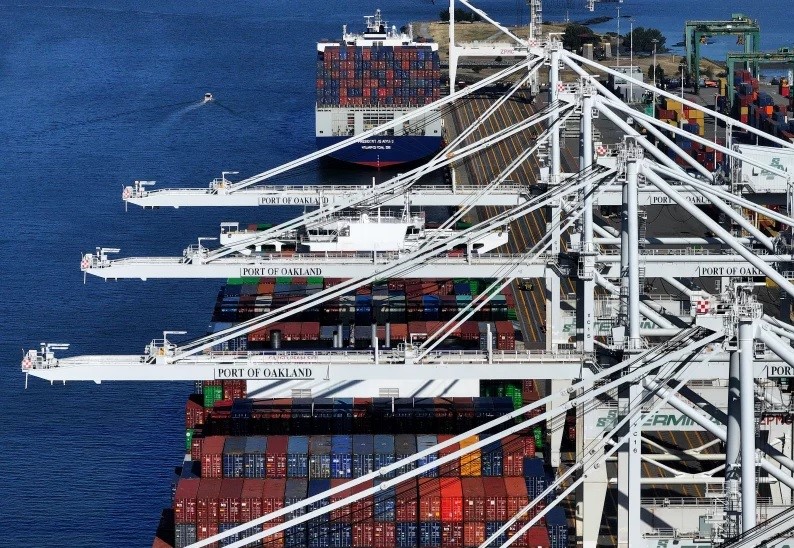
President Trump has been promising his tariffs will help make America more prosperous.
There’s already evidence that tariffs are helping the government’s bottom line. The federal government collected $68.9 billion in tariffs and excise taxes during the first five months of the year, according to Treasury Department data collected by the Bipartisan Policy Center.
That’s a 78% increase from the same period a year ago. Much of the additional revenue came in April and May, after Trump imposed tariffs of at least 10% on nearly everything the U.S. buys from other countries.
But whether the tariffs are making Americans more prosperous is another question. The tariff windfall isn’t coming out of thin air. Nor is it being paid by foreign governments, as Trump often argues.
Tariffs revenue is coming from Americans’ pockets
The tariffs are mostly being paid by American businesses and families.
“It’s a tax on the backs of people who are importing either raw materials or, in my case, wine” says Patrick Allen, a Columbus, Ohio-based importer who sells French wine throughout the country. “And eventually it gets built into the price everybody is paying for goods.”
If tariffs stick, they can shave off trillions in federal debt
There’s a silver lining: The non-partisan Congressional Budget Office (CBO) projected that if Trump’s tariffs were to remain in place for a full decade, they could shave $2.8 trillion off the federal debt.
The White House touted that forecast as a partial answer to the additional debt that would be racked up by the president’s tax cuts in the sweeping Republican bill that passed the House last month.
But the CBO also acknowledged that the tariffs will result in higher inflation this year and next, as well as slower economic growth.
The overall drag on the economy is hard to estimate, because the U.S. hasn’t had tariffs this high since the Great Depression era. But some experts think the damage could be substantial.
“Some are forecasting larger impacts and potentially pushing us into recession,” says Shai Akabas, vice president of economic policy at the Bipartisan Policy Center. “We won’t know until we see the fallout.”
Source Npr.org
About the Author